Ferret Care Guide

Get to Know Your Ferret
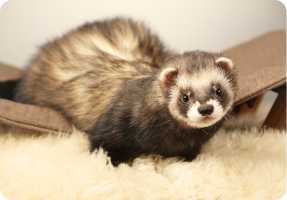
Basic Information
Common Name
Ferret
Scientific Name
Mustela putorius furo
Size
15” (without tail)
Life span
5 - 10 years
Gestation
42 days
Litter size
4 - 8 kits
Checklist for Your Ferret
Essential Items
Cage
Litter tray
Litter pellets
Dry food
Bedding
Treats
Water bottle
Food bowl
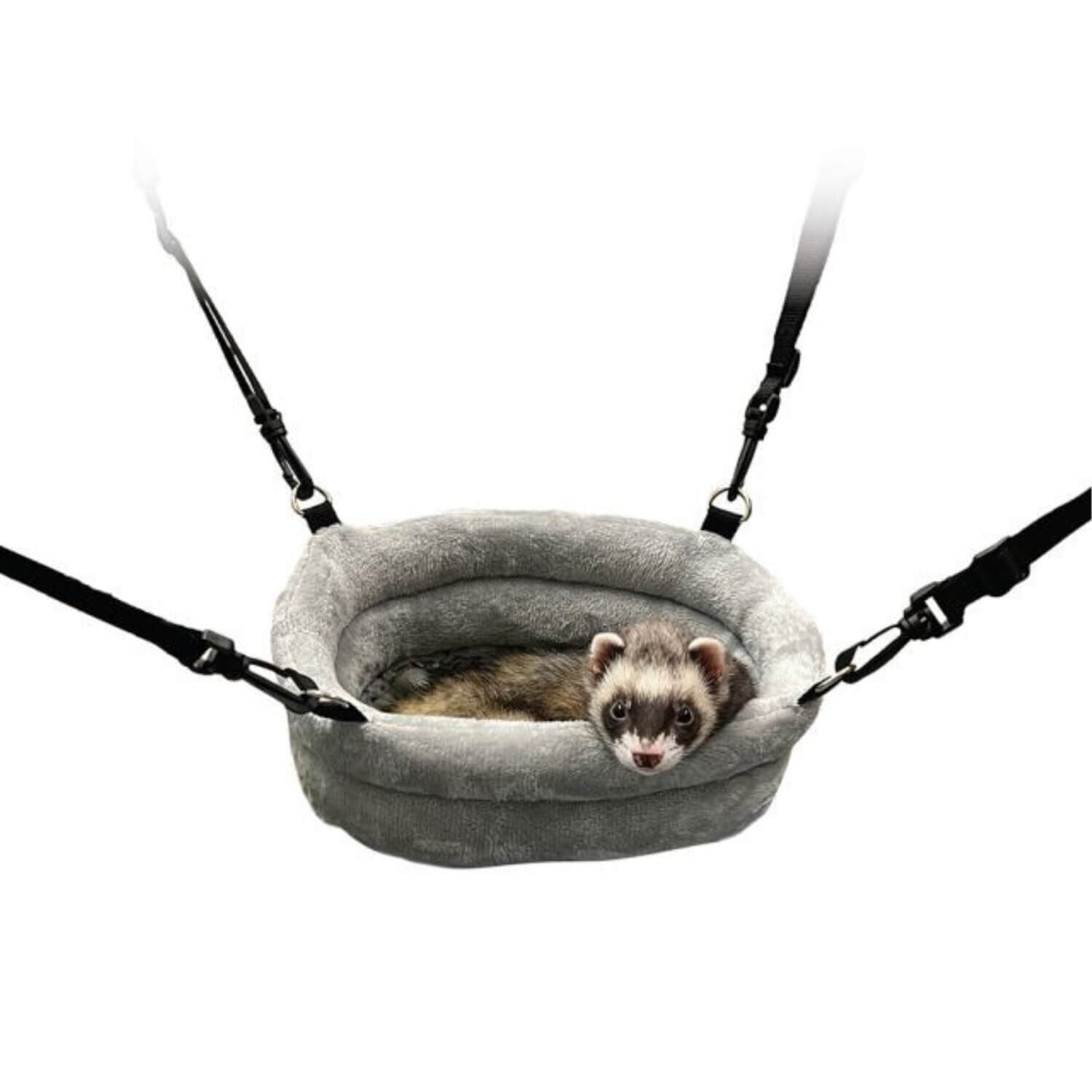
Hammock
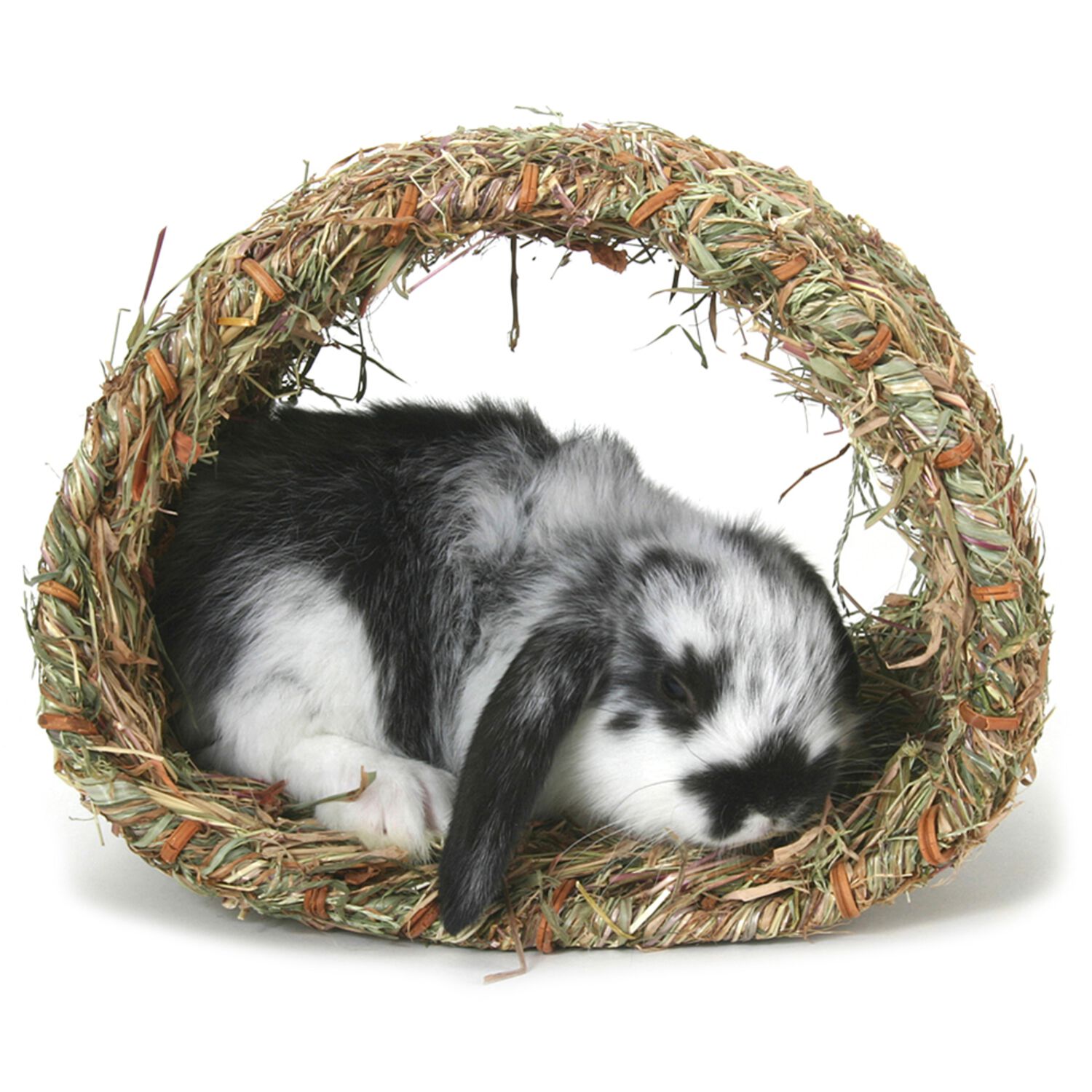
Hiding box or tunnel
Toys
Nail trimmer
Grooming supplies
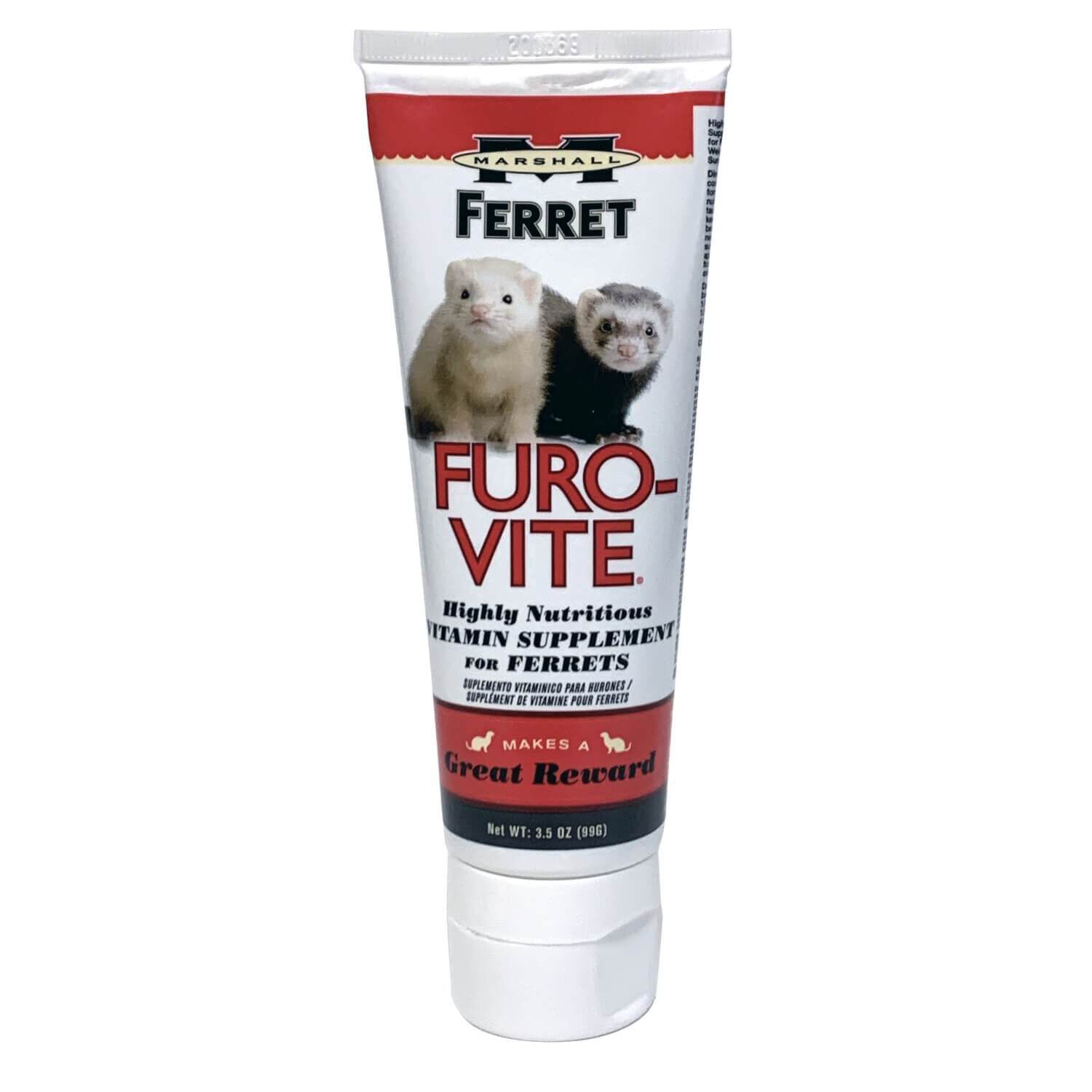
Vitamins
Everything your Ferret needs, all in one place.
Shop Ferret Supplies
Feeding Your Ferret
Food & Water
- Ferrets are carnivores and should only be fed a diet specifically made for ferrets. A minimum of 30% protein content is recommended.
- We do not recommend using commercial kitten food (this was common long before commercial ferret diets were available).
- Fresh water must always be provided.
A ferret’s digestive system cannot process these food items correctly.
Safe to Feed
prepackaged ferret treats
Avoid
Chocolate & other candy (all types of sweets)
Onions
Fruits
Raisins
Peanut butter – although some treats are flavored as such, they rarely contain this ingredient
Ferret Habitat
Caging & Environment
- Ferrets need a solid bottom cage (not wire) that is at least four feet long and two feet wide.
- Ferrets enjoy a large, spacious cage with multiple levels. The cage should also have a door that latches tightly to prevent escape.
- Hammocks they can burrow in or tunnels they can hide in and run through are great enrichment items
- Recycled paper litter
- Cage should include a ceramic food bowl, water bottle, hammock, and litter pan
Handling Your Ferret
Behavior & Handling
Monthly
Bathing
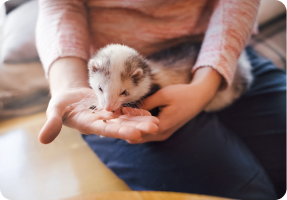
- Ferrets love to be held, don’t get too large and have an overall great temperament.
- Ferrets ideally should be kept in pairs since they are very smart, social and playful.
- Ferrets rarely bite, but very young ferrets may nip because they are teething.
- Always pick up a ferret by supporting its entire body. Squirming is normal at first, but make sure the entire body is supported – dropping a ferret can cause severe injury.
- When a ferret is startled, scared or excited, their tail will get very puffy – this is called “bottlebrush”. Sometimes, they will bottlebrush during playtime.
- Happy ferrets will also exhibit a “dance” of sorts: jumping around from side to side, flipping on the floor, bouncing, and sometimes opening their mouth during the display and make various sounds.
- Ferrets can be litter box trained. They will use a corner of the cage to eliminate in. Once you see this behavior, place a high corner litter box in that spot and put some of the excrement in the litter box (filled with a pelleted litter). The ferret will start to use the litter box to eliminate in (very young ferrets may take some time to catch on – patience is a must).
- Ferrets enjoy time to explore outside of their cage but can be destructive by chewing on household items or eating items that can cause intestinal obstructions. Make sure your ferret is closely supervised if out of its cage and cannot get under/behind any furniture or heavy items. There should be no wires or small objects they can chew/eat.
- Ferrets are notorious for stealing and stashing certain items, and it varies among individuals. Some ferrets will try to steal plush items (slippers, stuffed animals), or rubber items (shoe soles), or plastic (bags), etc.
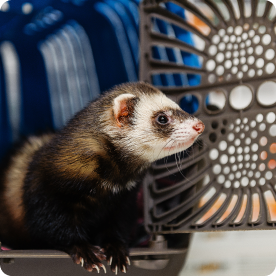
- Ferrets have a scent gland like skunks but are descented (scent gland is removed) before they are sold commercially. Many people consider their ferret to “stink” because they have a high concentration of oils in their skin and therefore emit a “ferret odor”. Bathing a ferret too frequently can actually increase the odor. Once a month baths are ideal, using a ferret deodorizing spray in between baths.
Common Health Problems
Ferret Health and Well-being
- The rabies vaccine is legally required for all ferrets like dogs and cats. This is a yearly vaccine. The distemper vaccine is recommended.
23 Results
23 Results
No products found for selected filters. Please try with different filters.
Showing 0 of 0