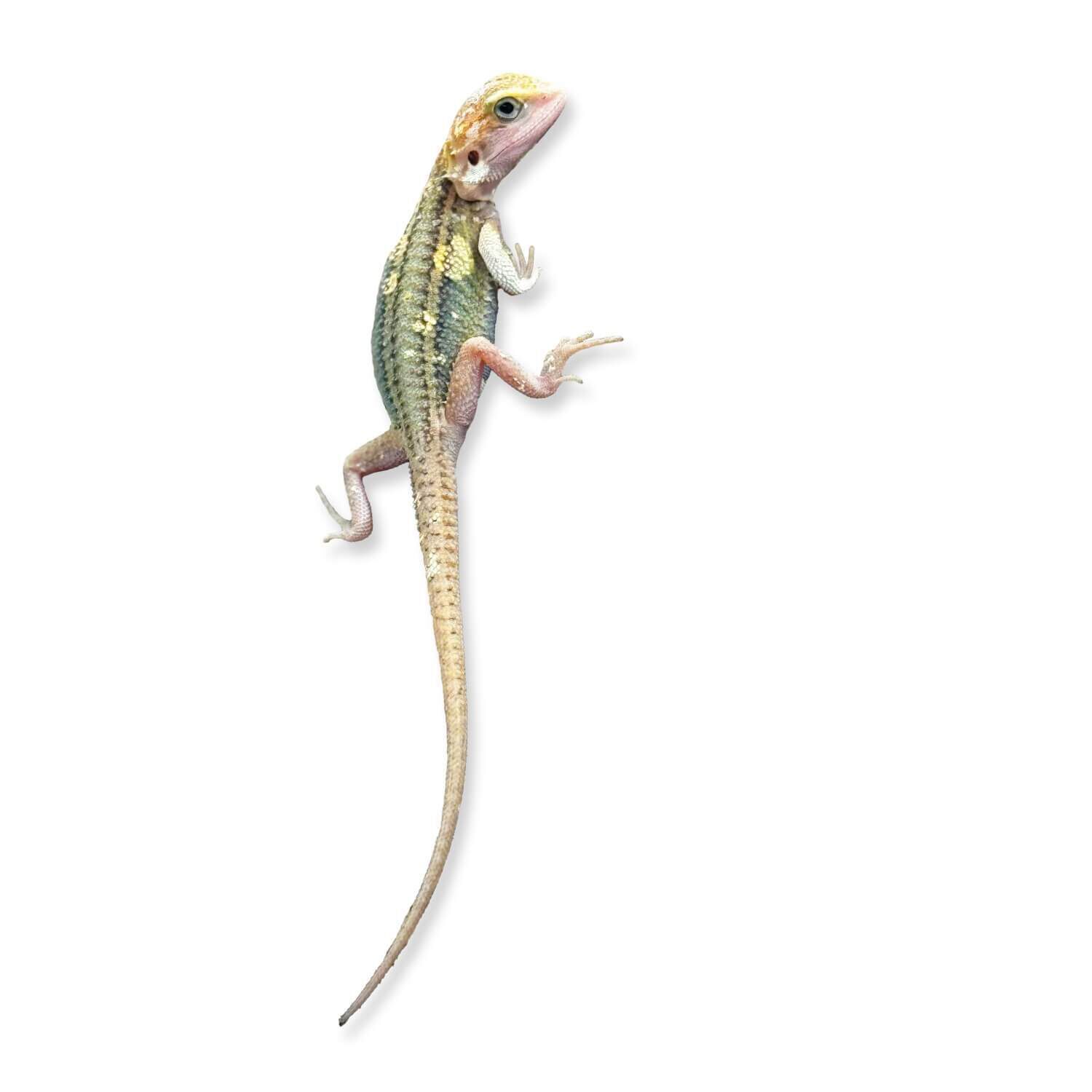
Pied Bearded Dragon
Pied Bearded Dragon


Product Details
Product Description
Product Description
The Pied bearded dragon is a stunning reptile with unique coloring and patterning, which can undergo significant changes as they mature.
- Average adult length of 15-20 inches
- Lifespan of 10 years
Feeding Instructions
Feeding Instructions
The bearded dragon's diet includes a variety of leafy greens such as romaine, escarole, endive, and red leaf lettuce. For insects, they will eat crickets, mealworms, and superworms. Always dust insects with calcium D3 vitamin before feeding. As a treat, they really enjoy edible flowers.
Note: make sure to remove any leftover crickets at nighttime.
Habitat and Care
Habitat and Care
Habitat and Care
Bearded dragons require a dry cage setup, with a cool temperature being 75 degrees Fahrenheit and a hot temperature being 105 degrees Fahrenheit. The basking area must be close enough to the basking light so the bearded dragon is warm enough to digest their food.
The enclosure should include UV lighting positioned close enough for the dragon to receive its benefits. Without adequate UV exposure, they may not grow properly and could develop metabolic bone disease.
The Pied bearded dragon is a stunning reptile with unique coloring and patterning, which can undergo significant changes as they mature.
- Average adult length of 15-20 inches
- Lifespan of 10 years
The bearded dragon's diet includes a variety of leafy greens such as romaine, escarole, endive, and red leaf lettuce. For insects, they will eat crickets, mealworms, and superworms. Always dust insects with calcium D3 vitamin before feeding. As a treat, they really enjoy edible flowers.
Note: make sure to remove any leftover crickets at nighttime.
Habitat and Care
Bearded dragons require a dry cage setup, with a cool temperature being 75 degrees Fahrenheit and a hot temperature being 105 degrees Fahrenheit. The basking area must be close enough to the basking light so the bearded dragon is warm enough to digest their food.
The enclosure should include UV lighting positioned close enough for the dragon to receive its benefits. Without adequate UV exposure, they may not grow properly and could develop metabolic bone disease.