Jumping Spider
Jumping Spider


Product Details
Product Description
Product Description
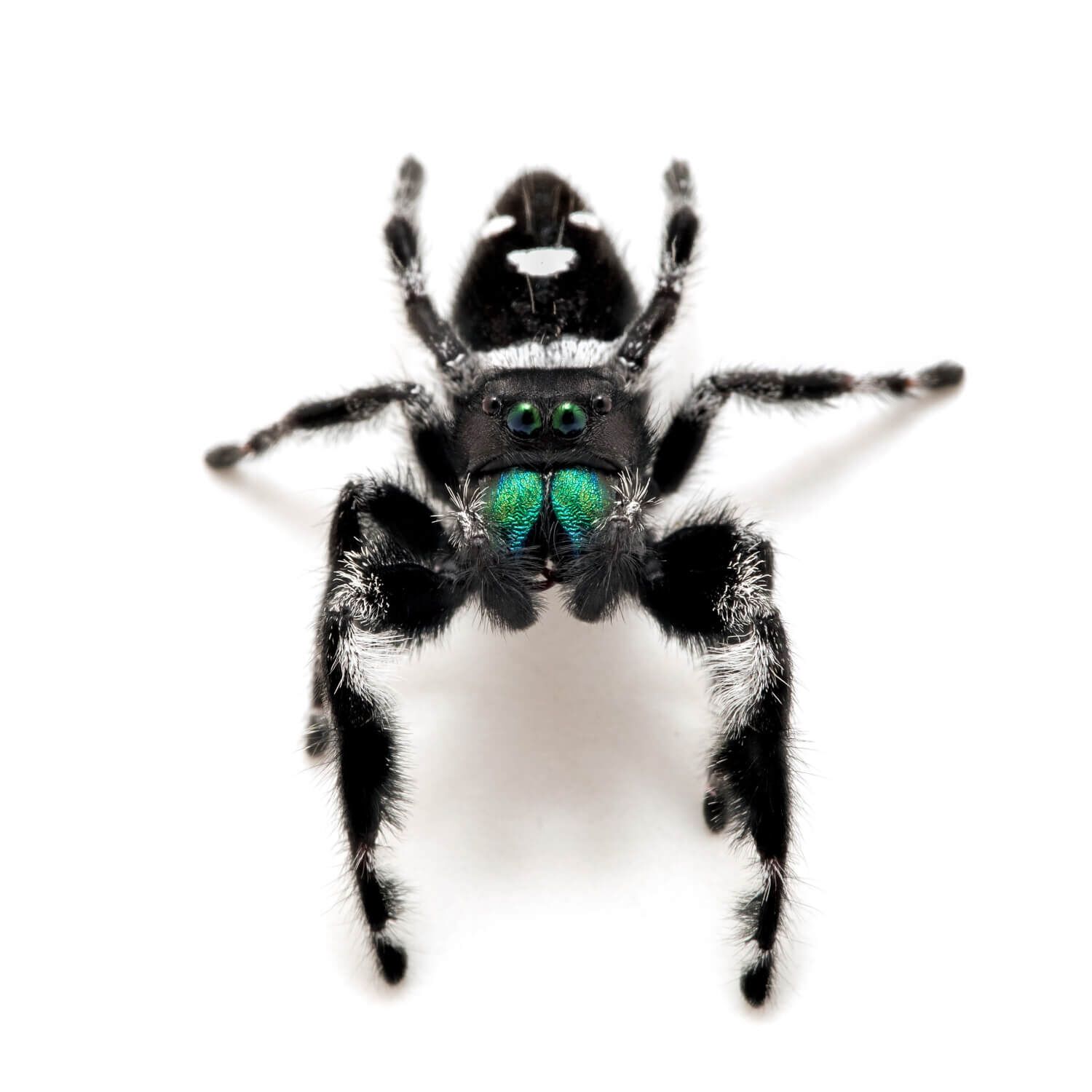
Jumping spiders are small, curious hunters known for leaping many times their body length to catch prey and avoid danger. They are also famous for their bright colors and elaborate mating displays. Available in select Pet Supermarket stores.
- Care Level: Beginner
- Adult Size: Up to 1 inch
- Life Expectancy: Up to 2 years
Feeding Instructions
Feeding Instructions
Jumping spiders eat live prey sized to the spider.
- Staple Diet: Flightless fruit flies for smaller spiders; waxworms, mealworms, crickets and flies as they grow
- Frequency: Remove any cricket your spider does not eat
- Water: Lightly spray one side of the enclosure with water once a day
Usage & Warning
Usage & Warning
Handle with care; some invertebrates can bite or sting and may cause irritation. Wash your hands after handling. Never release pets into the wild.
Habitat and Care
Habitat and Care
Habitat and Care
Jumping spiders live in trees and plants in the wild, so they enjoy a well-ventilated enclosure with room to climb.
- Experience Level: Beginner
- Minimum Enclosure: A vertical enclosure with good airflow to prevent moisture buildup
- Temperature: 70-85°F
- Lighting (UVB): Daily light is needed; use room light plus LED lamps during the day and avoid direct sunlight, which can overheat the enclosure
- Enrichment: Branches and plants for climbing
- Maintenance: Lightly mist one side of the enclosure once a day
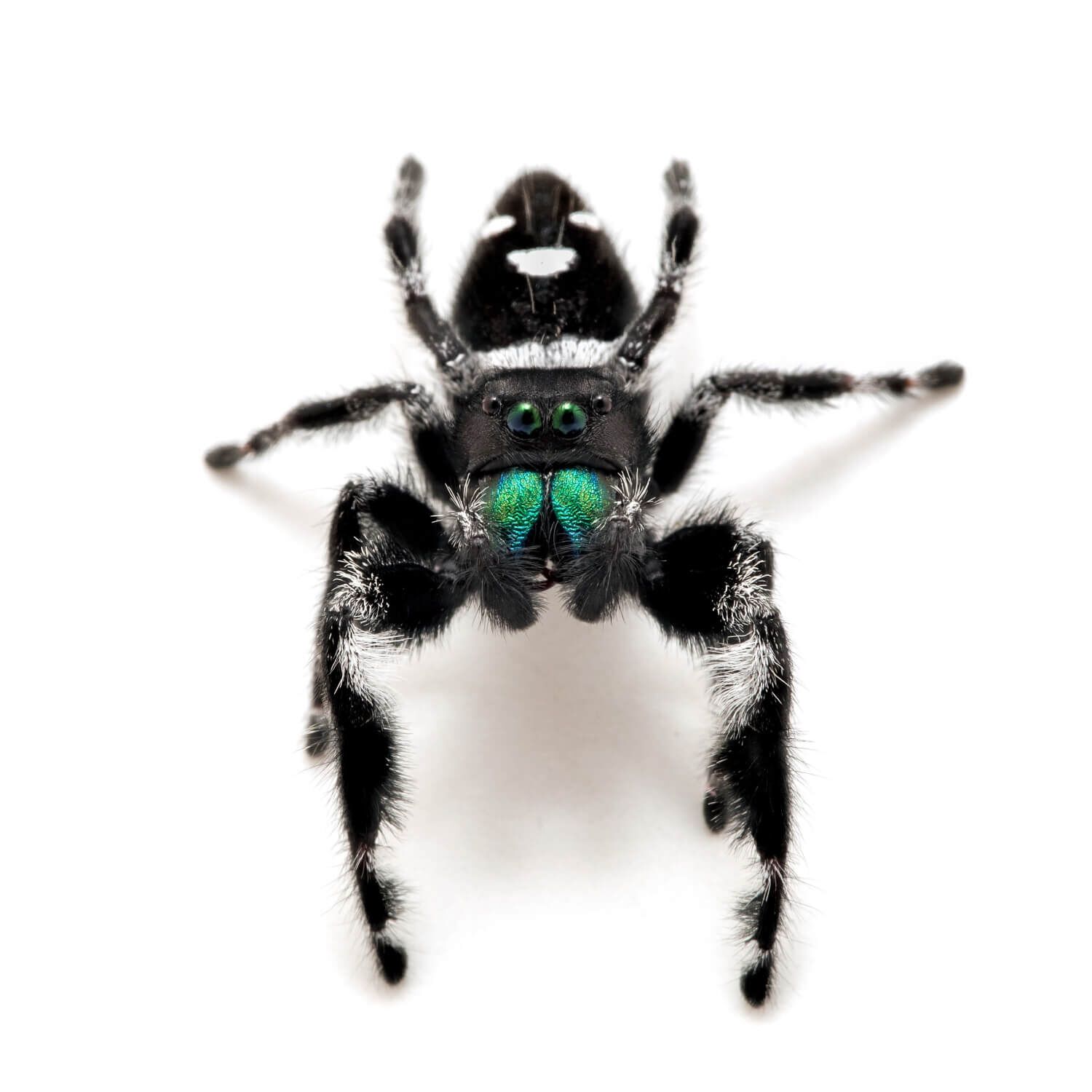
Jumping spiders are small, curious hunters known for leaping many times their body length to catch prey and avoid danger. They are also famous for their bright colors and elaborate mating displays. Available in select Pet Supermarket stores.
- Care Level: Beginner
- Adult Size: Up to 1 inch
- Life Expectancy: Up to 2 years
Jumping spiders eat live prey sized to the spider.
- Staple Diet: Flightless fruit flies for smaller spiders; waxworms, mealworms, crickets and flies as they grow
- Frequency: Remove any cricket your spider does not eat
- Water: Lightly spray one side of the enclosure with water once a day
Handle with care; some invertebrates can bite or sting and may cause irritation. Wash your hands after handling. Never release pets into the wild.
Habitat and Care
Jumping spiders live in trees and plants in the wild, so they enjoy a well-ventilated enclosure with room to climb.
- Experience Level: Beginner
- Minimum Enclosure: A vertical enclosure with good airflow to prevent moisture buildup
- Temperature: 70-85°F
- Lighting (UVB): Daily light is needed; use room light plus LED lamps during the day and avoid direct sunlight, which can overheat the enclosure
- Enrichment: Branches and plants for climbing
- Maintenance: Lightly mist one side of the enclosure once a day